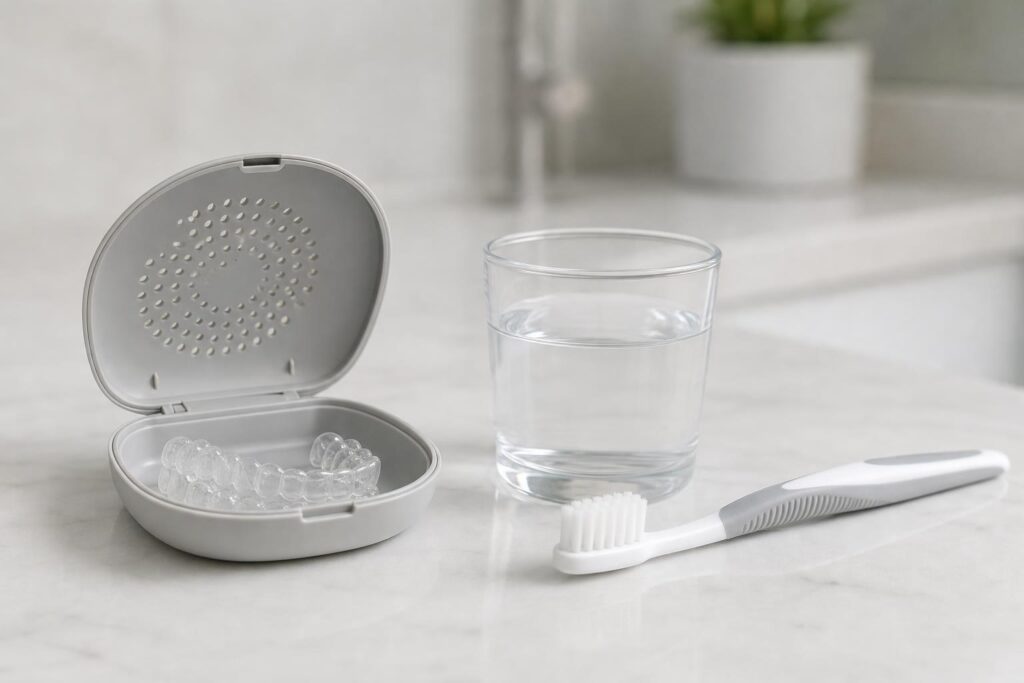
Clear aligners spend most of the day against your teeth, so keeping them clean matters for comfort, appearance and oral hygiene. The routine does not have to be complicated, but it does need to be consistent. Cleaning directions differ by product, so use the method supplied by your Invisalign provider or the cleaner manufacturer. A consistent routine helps the trays stay clear while you work through each stage of treatment.
This guide explains how to clean Invisalign aligners at home, what to avoid, and how to handle meals, travel and common problems. Your own treatment instructions always come first because wear schedules and products can vary.
Why clear aligners need daily cleaning
Aligners collect saliva, plaque and small food particles while you wear them. If a tray goes back over teeth that have not been cleaned after a meal, it can hold sugars and acids close to the enamel. That is one reason brushing and flossing remain important during treatment.
Cleaning also keeps the trays looking discreet. A thin film can make clear plastic look dull, while dried plaque can create rough areas or odour. Regular rinsing prevents buildup from becoming harder to remove later.
A simple morning and evening routine
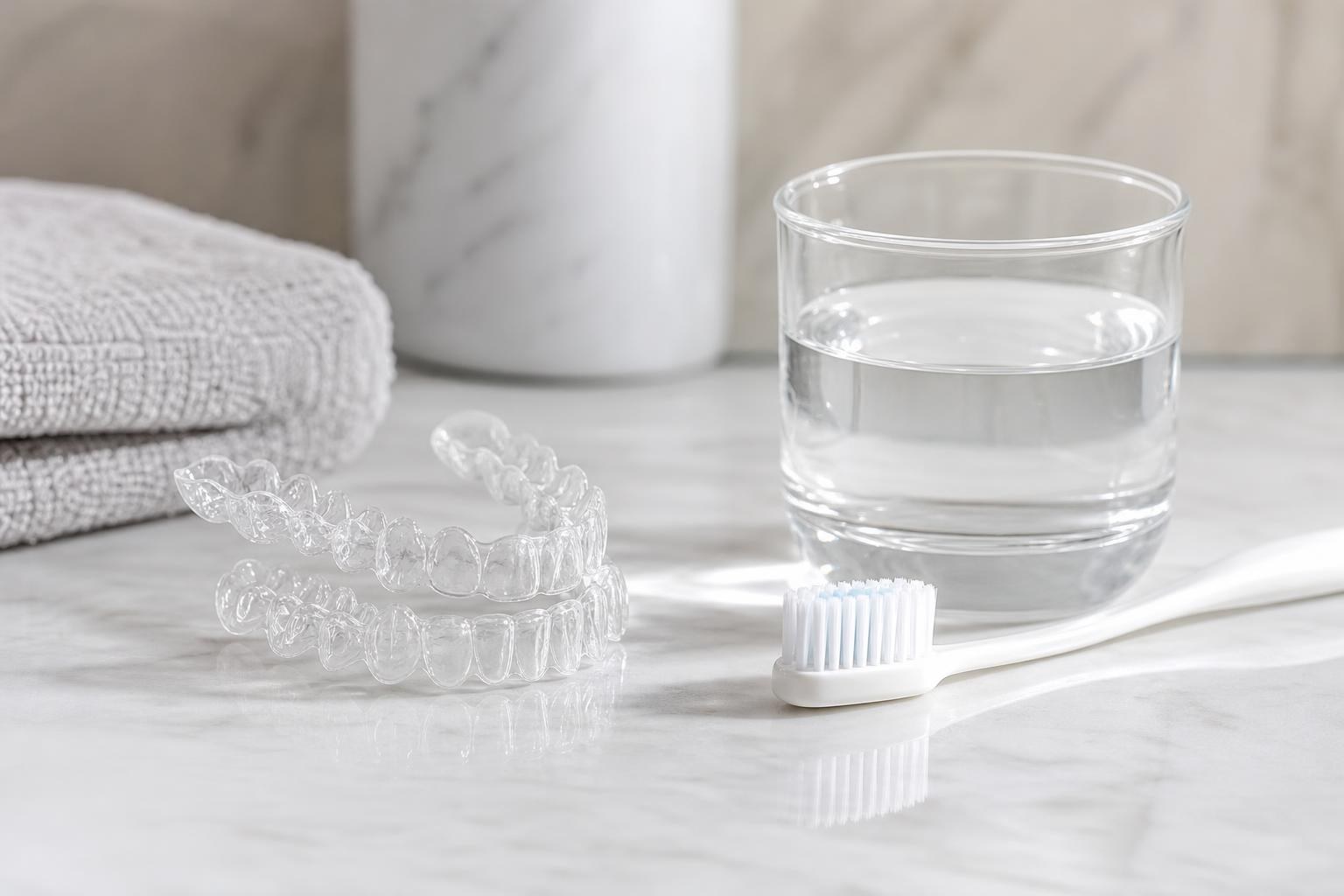
Remove the aligners and rinse them, then clean them using the method recommended for your trays. The official Invisalign Cleaning Crystals instructions direct users to place rinsed aligners in warm water with one packet, dissolve the crystals, soak for 15 minutes, and rinse thoroughly. Follow the label for the exact product you use rather than substituting household cleaners.
Inspect the trays in good light after cleaning. Clean your teeth before putting them back in. In the evening, take a little more time to brush around attachments and along the gumline before reinserting the clean aligners.
Why temperature matters
Clear aligners are made to fit the shape of your teeth closely. Very hot water can change the plastic and affect that fit. Use the water temperature specified by your provider or cleaning product; the cited Invisalign Cleaning Crystals instructions call for warm water. Keep the case away from radiators, direct sun and hot vehicles.
If a tray looks warped or suddenly feels different, do not try to reshape it yourself. Contact the dental office for advice and keep the previous set available unless you were told to discard it.
Use only the cleaning method recommended for your trays
Advice about toothpaste, soap, mouthwash and homemade soaks varies, and those products are not interchangeable with an aligner cleaner. Do not assume that a product that is safe for teeth, dentures, or a household surface is suitable for your Invisalign trays.
Use the instructions from your provider or the manufacturer of the aligner-cleaning product. The Invisalign manufacturer directions cited above specify warm water and its measured cleaning crystals, followed by a thorough rinse. They do not direct users to substitute toothpaste or liquid soap in that process. If you are unsure about a product, ask the clinician supervising your treatment before using it.
What to do at meals and snack time
Remove the aligners before eating. Food can stain the plastic, and chewing with trays in place may crack or distort them. Water is generally the simplest drink while aligners are in. Remove them for coffee, tea, soft drinks and other beverages that can add sugar, acid, heat or colour.
After eating, brush and floss when practical before replacing the trays. If you cannot brush immediately, rinse your mouth and the aligners thoroughly, then clean both properly as soon as you can. Do not leave the trays loose on a table or wrapped in a napkin; put them in their ventilated case so they are less likely to be lost or damaged.
How to handle odour, cloudiness and buildup
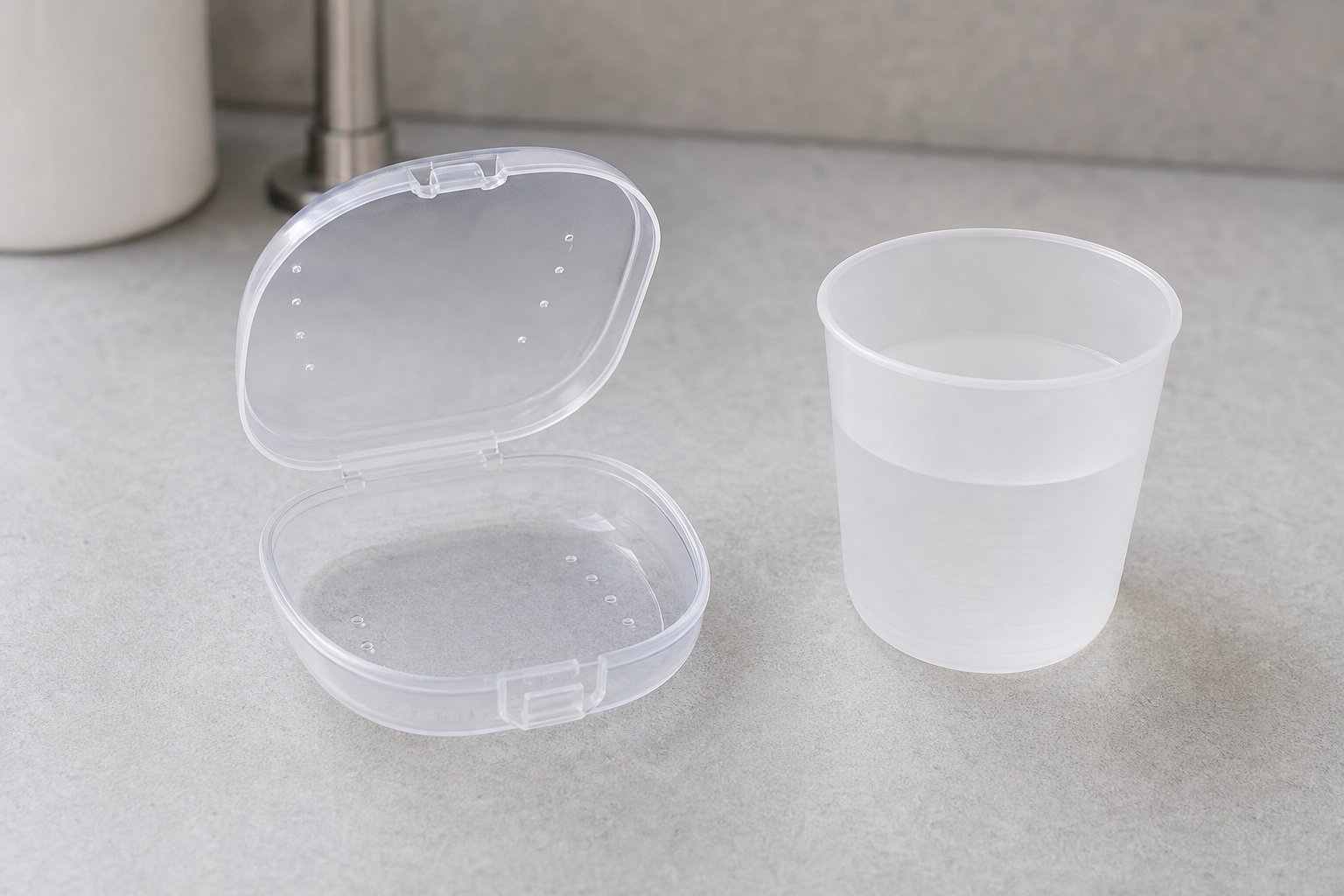
A persistent smell usually means film remains on the aligners or that the case needs cleaning. Clean the case according to its care instructions and allow it to dry fully. Clean each tray with the method recommended by your provider, and use an aligner-cleaning soak only as directed.
Cloudiness may come from mineral deposits, scratches or heat damage. Do not scrape the plastic with a hard tool. If gentle cleaning does not improve it, bring the tray to your next visit or call the office. A crack, sharp edge or poor fit should be checked rather than ignored.
Cleaning aligners while travelling
A small kit makes the routine easier away from home. Pack a travel toothbrush, toothpaste for your teeth, a separate soft brush for the trays, floss, the aligner case and any approved cleaning product. Keep the next set in its original packaging and carry it with you rather than placing it in checked luggage.
When clean water is limited, protect the trays in their case until you can rinse and clean them properly. Avoid storing damp aligners in an airtight container for long periods.
Keep the case clean too
The case touches the trays every day, yet it is easy to overlook. Empty crumbs and moisture, clean it according to its care instructions, rinse it well when directed and let it air-dry. Replace a cracked or damaged case so the aligners stay protected.
Never place a dirty tray into a clean case or a clean tray into a case with visible residue. Treat the aligners and case as one cleaning system.
Cleaning does not replace dental checkups
Clean trays help, but teeth and gums still need professional care during orthodontic treatment. Routine visits let the dental team check for plaque around attachments, gum irritation, decay risk and changes in the way the aligners fit.
The American Dental Association’s orthodontics overview also emphasizes oral hygiene during tooth movement. Follow your prescribed wear schedule and bring questions about cleaners or fit to the clinician supervising your treatment.
Attachments can create extra edges where plaque collects, so take time to brush around each one. A small mirror and good lighting help you check for food debris before replacing a tray. If the gum beside an attachment becomes persistently sore or swollen, mention it at the next visit rather than changing the tray or filing an edge at home.
Keep the previous set of aligners until your dental team says it is safe to discard them. If a current tray is lost or damaged, the earlier set may help maintain progress while the office decides whether you should move forward, replace the tray or adjust the schedule.
Frequently asked questions about cleaning Invisalign aligners
Can I brush aligners with regular toothpaste?
Regular toothpaste may scratch clear plastic. Use a soft brush with cool or lukewarm water and an approved mild cleaner instead.
Can I soak aligners overnight?
Only soak them for the time recommended by the aligner-cleaning product or your dental team. Long soaking can interfere with the daily wear schedule.
What if I drop an aligner on the floor?
Rinse it and clean it thoroughly before putting it back in. If it is cracked, warped or visibly contaminated, call the office for guidance.
Should I clean a new set before wearing it?
Rinse a new set and inspect it before use. Follow the instructions supplied with your treatment, and contact the office if an edge feels unusually sharp.
Build a routine that protects your treatment
The best aligner-cleaning routine is one you can repeat every day: rinse when the trays come out, clean them gently, brush and floss your teeth, and store them in the case during meals. Use only care products recommended for your trays, and ask your dental team when you are unsure.
For clear-aligner treatment or help with a tray that looks cloudy, cracked or poorly fitted, see Ivory Dental’s Invisalign service page. Call our Pickering office at (905) 839-9663 or contact us to request an appointment.