A dental implant cannot develop a cavity, but the gum and bone around it still need daily care. Plaque can collect around the implant crown and along the gumline just as it does around natural teeth. When that buildup is not removed, the surrounding tissue can become inflamed and the support around the implant may be put at risk.
Dental implant maintenance combines careful home cleaning with regular professional visits. This guide explains what to clean, which tools may help, what changes deserve attention, and how habits such as smoking or teeth grinding can affect long-term care.
Know the parts you are cleaning
An implant restoration usually has three parts: the implant placed in the jaw, an abutment that connects the restoration, and the visible crown. For a patient, the most important cleaning area is the margin where the crown meets the gum. Plaque can hide there even when the crown itself looks clean.
The shape of the restoration and the space between nearby teeth affect which tools work best. A single implant crown, an implant-supported bridge and an implant-retained denture do not share exactly the same cleaning routine, so ask for a demonstration based on your restoration.
Brush twice a day with gentle technique
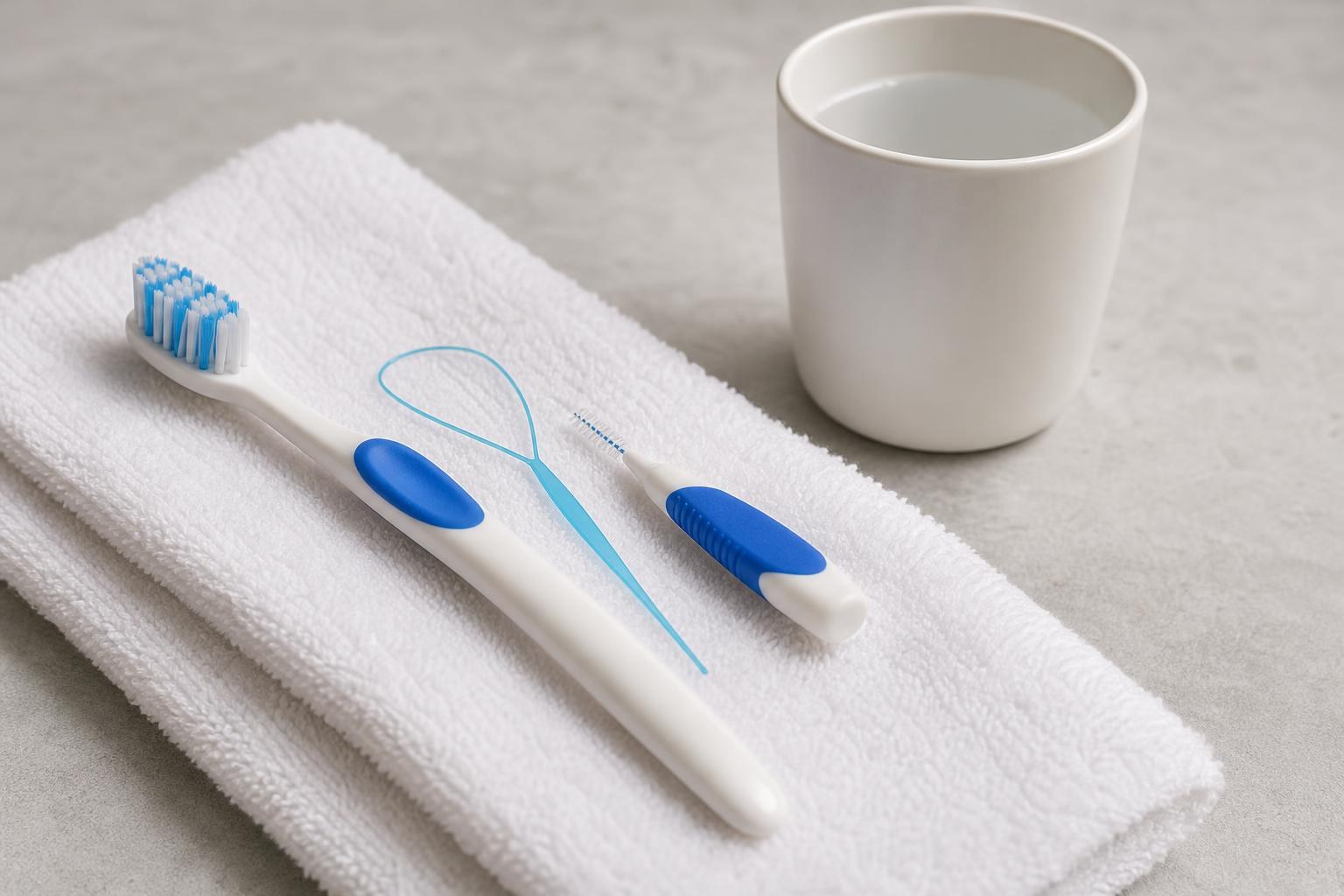
Use a soft-bristled manual or electric toothbrush and clean all surfaces of the implant crown. Angle the bristles toward the gumline and use light pressure. Hard scrubbing can irritate the tissue and does not necessarily remove plaque more effectively.
Brush the rest of your teeth at the same time. An implant is part of a complete bite, and inflammation or decay elsewhere can make oral hygiene harder. Replace a worn toothbrush head and ask the dental team whether a low-abrasive toothpaste is a better choice for the materials in your restoration.
Clean between the implant and neighbouring teeth
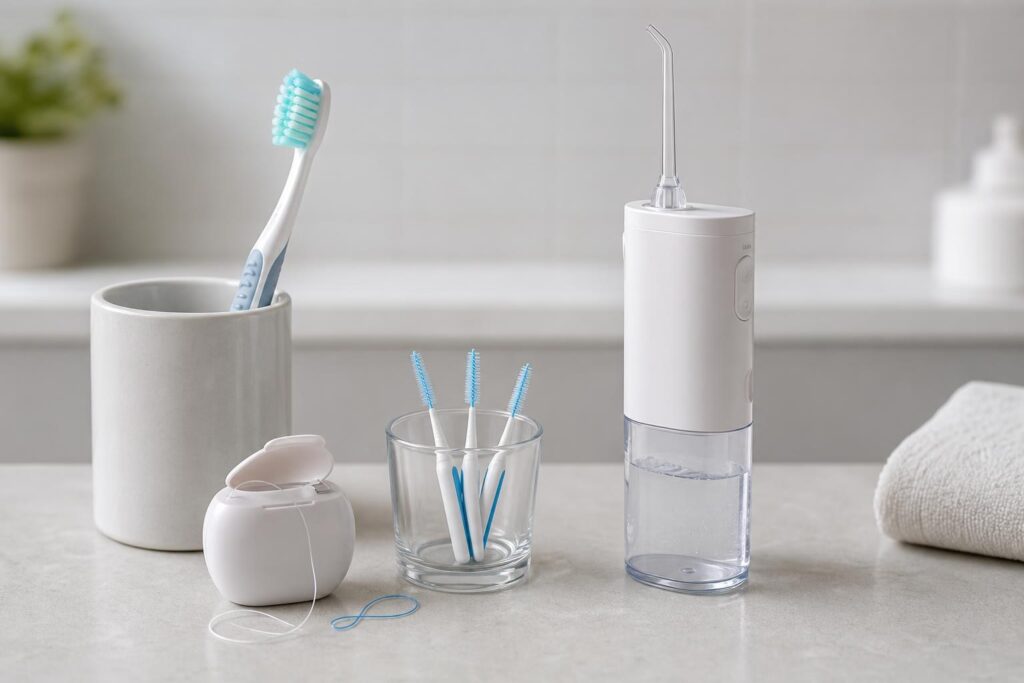
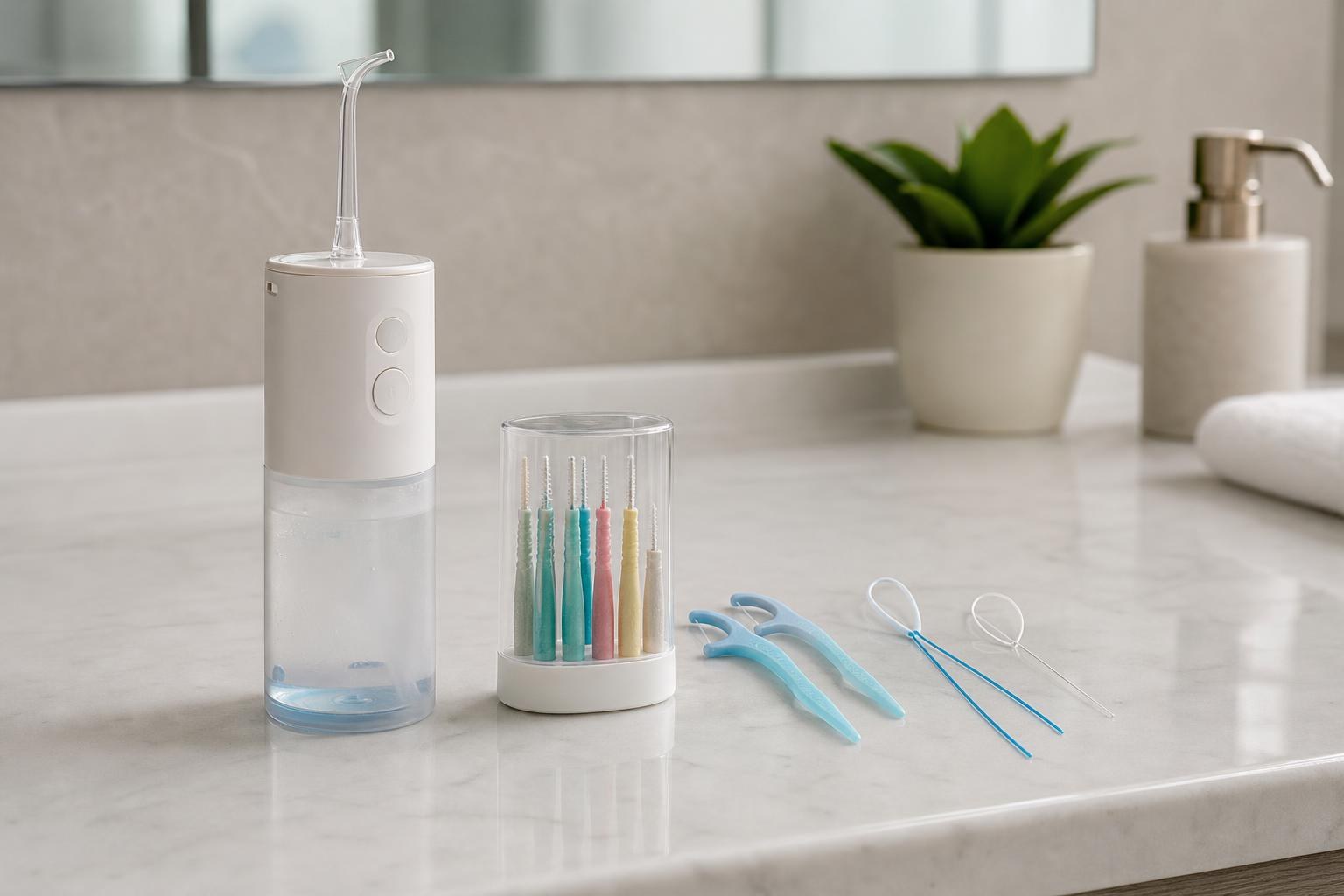
A toothbrush cannot reach every side of an implant crown. Floss designed for implants, a floss threader, an interdental brush or a water flosser may help clean the spaces beside and beneath the restoration. The best option depends on the size of the gap and the contour of the crown.
Move floss gently and avoid snapping it into the gums. If an interdental brush is recommended, use the size shown by your hygienist rather than forcing a brush through a tight contact. A water flosser can be useful, but it should supplement a complete routine rather than replace brushing.
Pay attention to the gumline
Healthy tissue around an implant is generally comfortable and not prone to bleeding with gentle cleaning. Redness, swelling, tenderness, bleeding or a persistent bad taste can signal inflammation. These changes are easier to address when they are checked early.
Do not stop cleaning an area simply because it bleeds. Use a gentle technique and contact the dental office for guidance. Sudden swelling, drainage, significant pain or a loose-feeling restoration needs prompt assessment.
Keep professional maintenance visits
Professional visits allow the dental team to examine the gum around the implant, check the restoration, assess the bite and remove deposits that home tools may miss. The schedule is individualized. Some people can follow a routine recall interval, while others need more frequent maintenance because of gum-disease history, smoking, diabetes, difficult-to-clean restorations or other risk factors.
The clinician may use instruments selected for implant surfaces and may take images when there is a reason to assess the surrounding bone. Bring your home-care tools to the visit if you want the hygienist to check your technique.
Protect the implant from excessive force
Clenching and grinding can place repeated force on an implant crown and its connecting components. Signs can include morning jaw fatigue, worn teeth, chipping or a screw that loosens. A dentist can check the bite and decide whether a protective appliance is appropriate.
Avoid using the implant crown to crack hard foods, chew ice or open packages. The implant may be strong, but the porcelain or other crown material can still chip.
Smoking and overall health matter
Smoking is associated with poorer healing and a higher risk of problems around implants. If you smoke, discuss cessation support with a health professional. Keep medical conditions such as diabetes managed with the clinicians responsible for your care, and tell the dental team about medication or health changes.
The American Dental Association’s consumer overview of dental implants explains that implants require the same commitment to oral hygiene and regular dental visits as natural teeth.
Daily habits matter as well. Frequent sugary drinks can increase the cavity risk for natural teeth beside an implant, while an unbalanced chewing pattern may overload one side. Eat a varied diet, drink water regularly and avoid holding hard objects between your teeth. These ordinary choices support the whole mouth, including the implant site.
If you wear a removable appliance over implants, use the cleaning method demonstrated for that specific design and clean the tissues it covers. Remove it only as directed, and bring it to maintenance visits so the fit, attachments and cleaning access can be checked together.
What to do if food keeps catching
Occasional food trapping can happen around many restorations, but a new or worsening trap deserves a look. The contact between teeth, the crown contour or gum changes may be involved. Do not dig at the area with pins or sharp objects. Rinse, clean gently with an appropriate interdental tool and arrange an assessment if it continues.
If floss repeatedly shreds or catches, mention it. That detail can help the dentist identify a rough edge or a contact that should be examined.
Watch for looseness or bite changes
An implant crown should not rock or click. A loose crown or connecting screw is different from a loose implant, but both require professional evaluation. Stop chewing on that side and contact the office rather than testing it repeatedly.
A bite that suddenly feels high can also place extra pressure on the restoration. Early adjustment may prevent a small mechanical issue from becoming a larger repair.
Frequently asked questions about dental implant maintenance
Can dental implants get cavities?
The implant and crown cannot decay like a natural tooth, but nearby teeth can. Plaque can also inflame the gum and affect the bone supporting the implant.
Can I use ordinary floss around an implant?
Some implant crowns can be cleaned with ordinary floss, while others are easier to reach with implant floss, a threader or an interdental brush. Ask which tool and technique fit your restoration.
How often should an implant be professionally cleaned?
The interval depends on your gum health, cleaning access and risk factors. Follow the recall schedule recommended after your examination rather than assuming one interval fits everyone.
What if the implant crown chips?
A chipped crown should be examined even if it does not hurt. Avoid chewing hard foods on that side and contact the office to request an appointment.
Make implant care part of your normal routine
Implant maintenance works best when it is ordinary and consistent: brush gently twice a day, clean between the restoration and nearby teeth, keep professional visits, and report changes early. The right tools should make the area easier to clean without hurting the gums.
To learn how implant treatment is planned, visit Ivory Dental’s dental implants in Pickering page. If you have bleeding, food trapping, a bite change or a loose-feeling implant crown, call (905) 839-9663 or contact us to schedule an assessment.