
If you have not needed a filling in a while, the conversation in the dental chair has changed. The silver-coloured amalgam fillings that dominated dentistry for over a century now share the stage with tooth-coloured composite resin, and in most offices, including ours, composite has become the everyday choice. Yet amalgam has not disappeared, and patients with a mouthful of older silver fillings reasonably wonder whether they should do anything about them.
At Ivory Dental, the composite vs amalgam fillings question comes up almost daily at our Pickering and Danforth offices. Here is an honest comparison of the two materials, and our take on the replacement question, without the scare tactics that sometimes surround this topic.
What the Two Materials Are
Amalgam is a metal alloy of silver, tin, copper, and mercury that dentists have used for more than 150 years. It is strong, forgiving to place, and famously durable, which is why so many molars from past decades still carry it.
Composite resin is a blend of plastic resin and fine glass particles that hardens under a blue curing light. It is matched to your tooth’s shade, bonds directly to tooth structure, and has improved enormously over the past twenty years, closing most of the durability gap that once separated it from metal.
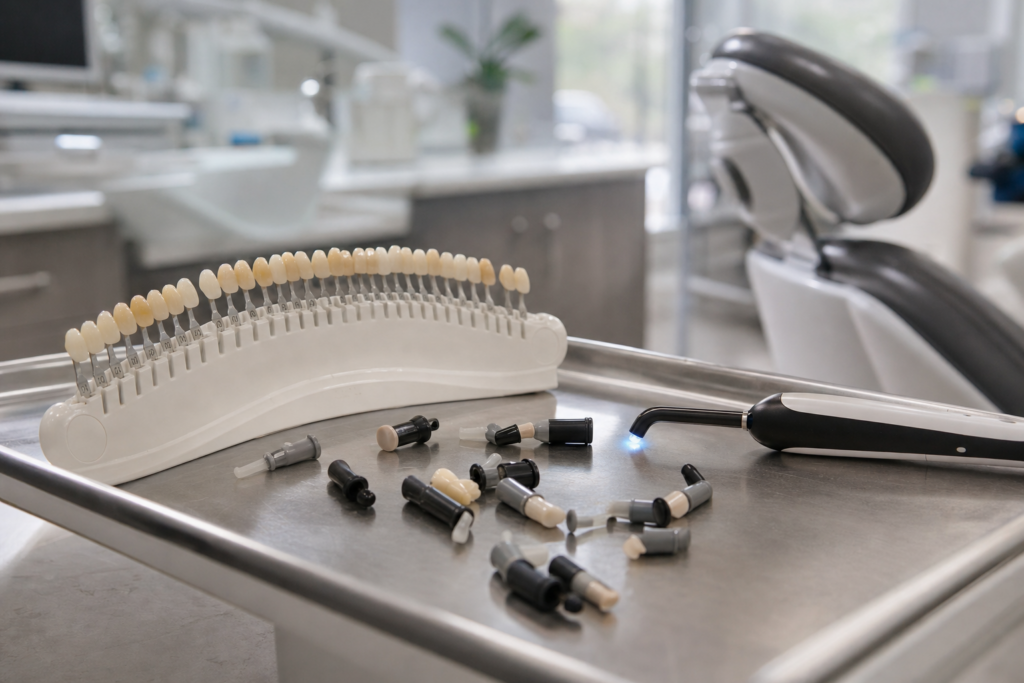
The placement experience differs more than patients expect. Amalgam is packed into the prepared cavity and simply sets. Composite is built up in thin layers, each cured under the blue light, and the tooth must stay dry throughout, which is why a composite appointment runs a little longer for the same size of cavity. That extra chair time is most of what you are paying for in the price difference, and it buys precision: your dentist sculpts the filling to match the tooth’s original contours before polishing it to blend in.
Appearance: No Contest
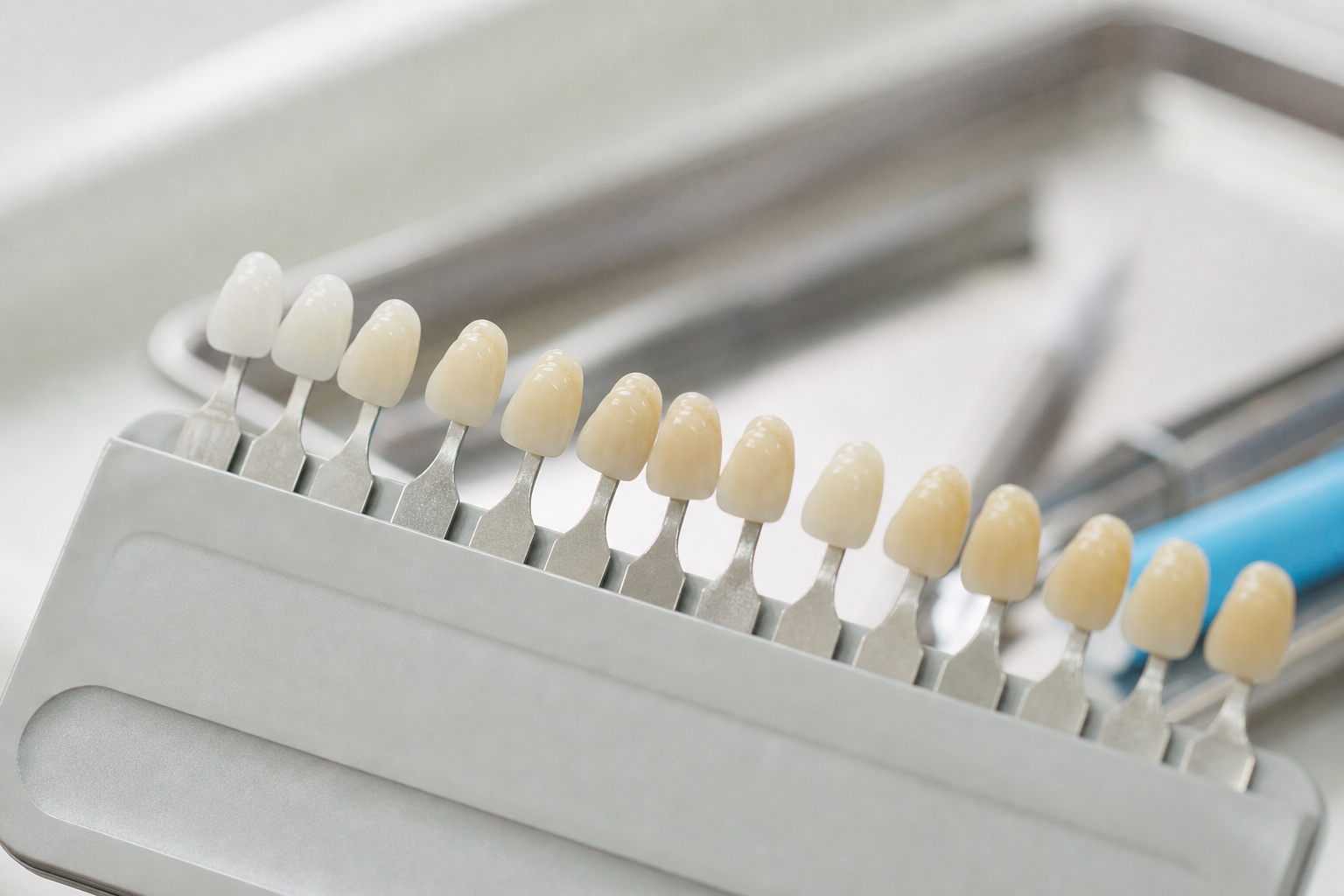
Composite wins outright on looks. A well-placed composite filling is essentially invisible; your dentist matches the shade to the surrounding enamel using a shade guide, and even you may lose track of which tooth was treated. Amalgam is unmistakably metallic and tends to darken with age, sometimes greying the surrounding tooth as well. For front teeth and any tooth visible when you smile, composite is the standard of care on aesthetics alone.
Durability and How Each One Fails
Amalgam earned its reputation honestly: on large chewing surfaces it routinely lasts 15 years and often far longer. Modern composite in a small or medium cavity now performs comparably, commonly lasting 10 to 15 years with good hygiene, though in very large cavities on heavy-biting molars amalgam still holds a modest edge.
The more interesting difference is how they fail. Amalgam is rigid and slightly expands and contracts with temperature, so over decades it can stress the surrounding tooth, and a very old silver filling sometimes leaves behind a cracked cusp. Composite bonds to the tooth and flexes with it, which supports the remaining structure, but its edges can slowly wear and stain, giving your dentist an earlier, gentler signal that replacement time is approaching. Composite also allows a more conservative repair: because it bonds rather than locks in mechanically, less healthy tooth needs to be removed to place it, and a worn composite can often be patched rather than fully replaced.
The Safety Question, Answered Calmly

Amalgam contains mercury, and that word understandably raises questions. The scientific consensus, reflected by Health Canada and dental associations worldwide, is that set amalgam in a filling releases only trace amounts of mercury vapour and remains a safe, effective material for the general population, though as a precaution its use is minimized in young children and in pregnant or breastfeeding patients. You can read the Canadian Dental Association’s position on dental materials at cda-adc.ca.
Just as importantly: drilling out sound amalgam fillings purely to “detox” briefly increases mercury vapour exposure rather than reducing it, and sacrifices healthy tooth structure for no medical benefit. No credible dental body recommends prophylactic removal, and neither do we.
So Should You Replace Your Old Silver Fillings?
Our guidance is simple: replace amalgam fillings when there is a dental reason, not a cosmetic panic. Good reasons include decay creeping under an old filling, a cracked or broken filling, a fractured cusp beside one, or an aging restoration whose margins no longer seal. At that point, replacing the failed amalgam with composite, or with a crown when too little tooth remains, is the natural path, and it is how most mouths gradually go metal-free over time anyway.
If the appearance of a visible silver filling genuinely bothers you, that is a legitimate conversation too; just have it as a planned cosmetic decision with your dentist rather than an urgent health matter. We are always happy to look at existing fillings during a checkup and tell you plainly which ones are solid and which are approaching retirement. It is part of every exam in our dental services.
How We Decide Together at Your Appointment
When a new cavity needs filling, the material conversation at our office covers four practical questions. Where is the tooth, and does it show when you smile? How large is the cavity, and how much healthy structure remains? How heavy is your bite, and do you grind at night? And what does your dental plan cover? For most small and medium cavities the answers point to composite, which is why it has become our default. For the occasional very large restoration on a back molar, we will tell you honestly when a crown, or in rare cases amalgam, is the more durable answer. The right filling is the one chosen for your tooth, not the one on special this month.
Frequently Asked Questions
Which lasts longer, composite or amalgam fillings?
In large molar cavities, amalgam still has a slight edge. In small and medium cavities, modern composite performs comparably, typically 10 to 15 years, and it can often be repaired rather than fully replaced.
Are amalgam fillings safe?
Health Canada and major dental associations consider set amalgam safe for the general population, with precautionary limits for young children and during pregnancy. Existing intact amalgam fillings do not need removal for health reasons.
Do composite fillings cost more?
Composite generally costs somewhat more than amalgam because placement takes more time and technique, and fees scale with the size of the filling. Most dental plans in Ontario cover fillings, though some reimburse molar composites at the amalgam rate, and our front desk can check your coverage before treatment.
Can a composite filling be placed where an amalgam one was?
Yes. When an old amalgam filling fails, it is routinely replaced with composite, provided enough healthy tooth remains. Very large replacements sometimes call for a crown instead, which we will discuss before starting.
How do I know if my old fillings need attention?
Watch for new sensitivity, a rough or sharp edge, food catching, visible cracks, or darkening around the filling. Otherwise, regular checkups are exactly the surveillance old fillings need; we monitor their margins at every exam.
Curious about a specific tooth, or ready to talk through options for an aging filling? Call Ivory Dental at (905) 839-9663 or book through our contact page at either our Pickering or Danforth location, and we will give you a straight answer about what needs doing and what can happily be left alone.