
Dental bridges play a crucial role in filling the gaps left by missing teeth. They work not just to restore your smile, but also to bring back the normal function of your teeth, like chewing and speaking clearly. Imagine you’ve lost a tooth, and it’s like losing a piece of a puzzle that can throw off the whole picture. Dental bridges help in bringing that complete picture back to life. In this article, we will explore the differences between two common types of dental bridges: cantilever and traditional. Knowing the distinctions can empower you to make informed decisions for your dental health.
Making a choice between cantilever and traditional bridges could depend on factors like the placement area in the mouth and the support structure for the bridge. Cantilever bridges, for example, might be recommended in specific situations where only one side of the missing tooth has a neighboring tooth for support. Meanwhile, traditional bridges often use multiple teeth as anchors to create more stability. Our goal is to help you understand which type of bridge might be more suited to your needs in Pickering or elsewhere, ensuring you are well-prepared for discussions with your dentist about restoring your smile.
What Are Dental Bridges?
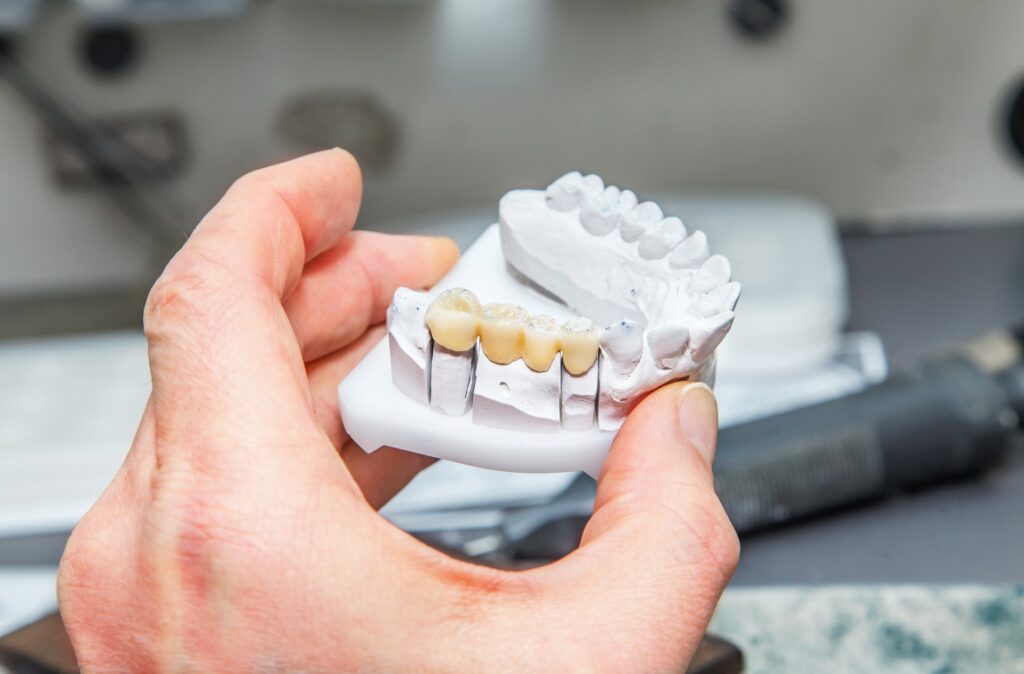
Dental bridges are a type of dental restoration used to replace one or more missing teeth. They work by literally bridging the gap where a tooth is missing. A typical bridge consists of two crowns cemented onto the teeth on either side of the gap, known as abutment teeth, with one or more artificial teeth in between.
Here’s a simple breakdown of how dental bridges function:
– Structure: Generally composed of metal, ceramics, or porcelain, the bridge includes crowns that sit on abutment teeth and a pontic, which is the artificial tooth that replicates the missing one.
– Purpose: Helps restore the function and aesthetics of your mouth. It enables you to chew properly, speak clearly, and maintain the natural shape of your face.
– Options: Various types include cantilever, traditional, Maryland, and implant-supported bridges, each designed for specific conditions and outcomes.
Bridges work by re-establishing the natural alignment of your teeth, which can prevent other teeth from drifting out of position. They help distribute the forces in your bite properly when you chew. In essence, dental bridges not only fill the gaps but also offer a more balanced way to maintain oral health.
Understanding Cantilever Bridges
Cantilever bridges offer a unique way to replace missing teeth. They differ from other types because they only anchor to one side of the missing tooth gap. This can be particularly practical when there is only one adjacent tooth to support the bridge.
Cantilever bridges come with their own set of benefits and limitations:
– Pros:
– Utilizes less dental work on surrounding teeth, since it only requires one tooth for support.
– Less invasive than some other options, making it quicker to implement.
– Cons:
– May not be as stable as traditional bridges due to single-point anchoring, especially in areas of the mouth with significant biting pressure.
– Risk of placing extra stress on the supporting tooth.
Recommended situations often involve regions of the mouth with less chewing pressure, such as front teeth. They are not commonly used in areas with higher stress, like molars. Cantilever bridges might work best for people who have good oral hygiene and fewer options for anchoring multiple teeth.
Exploring Traditional Bridges
Traditional bridges are a commonly used method for replacing missing teeth. Unlike cantilever bridges, they anchor to teeth on both sides of the gap, providing greater stability. Think of a traditional bridge like a standard bridge you would drive over — supported at both ends for maximum strength.
Here’s how traditional bridges stand out:
– Common Usage: Typically employed in areas of the mouth that endure more pressure, like molars. They do well in handling the stress of everyday chewing.
– Benefits:
– Offers strong support by using two or more teeth for anchoring the bridge.
– Tends to last longer due to its balanced support structure.
– Drawbacks:
– May require more preparation of adjacent teeth, which can involve removing more natural tooth structure.
– Could feel slightly more invasive due to the work on multiple teeth.
These bridges are ideal when multiple strong anchor points are needed. They’re reliable for spaces in the mouth with higher function demands and are known for their durability. If you have been considering which option might be the right one for addressing a gap in your teeth, traditional bridges are often preferred for their classic, sturdy design.
Comparing Cantilever and Traditional Bridges
When deciding between cantilever and traditional bridges, several factors come into play. Each type has its own strengths, suited for different scenarios and preferences. Here is a quick comparison to help guide your choice:
1. Support Structure:
– Cantilever: Anchored on one side, less invasive but potentially less stable for high-pressure areas.
– Traditional: Anchored on both sides, offering robust support for heavier biting forces.
2. Durability and Maintenance:
– Cantilever: May require more regular checkups to ensure stability, especially if under duress.
– Traditional: Known for enduring the test of time, with maintenance similar to natural teeth.
3. Aesthetic Considerations:
– Cantilever: Better for smaller gaps, mostly in less visible parts of the mouth.
– Traditional: Complements larger gaps, offering a uniform appearance across teeth.
4. Cost Factors:
– Cantilever: Typically incurs lower upfront costs due to fewer teeth being involved.
– Traditional: More complex and potentially costly due to the structure and materials needed.
By considering these aspects, you can determine which bridge may suit your needs better regarding your priorities and the specific location in your mouth that requires filling.
Making the Right Choice for Your Smile
Weighing the benefits and differences between cantilever and traditional bridges can seem a bit of a challenge. Yet, understanding each type’s suitability for different dental scenarios allows you to take informed steps toward maintaining a healthy and complete smile. Consulting with a dental professional in Pickering can provide further personalized guidance, ensuring you choose a bridge type that matches your lifestyle and dental requirements.
Remember, dental check-ups are an integral part of preserving the longevity of your bridge. Routine visits ensure that everything stays in alignment and catches potential issues before they turn into bigger problems. Whether you opt for a cantilever or traditional bridge, maintaining good oral hygiene and seeking professional advice when needed are the keys to a lasting smile.
Choosing the right bridge can have a big impact on your smile and overall oral health. For anyone considering dental bridges in Pickering, it’s important to consult with experts who can provide personalized advice. At Ivory Dental, our team is ready to help you find the best solution tailored to your needs. To learn more about how dental bridges can transform your smile, contact us today.
Related Reading
- Why Teeth Cleaning in Toronto Matters More in Spring
- Cracked Crowns in Pickering What Can Be Salvaged
- How a Family Dentist in Pickering Helps with Toddler Cavities
Frequently Asked Questions
How long does a dental bridge last?
With proper oral hygiene and regular checkups, dental bridges typically last 5 to 15 years. Some bridges can last even longer with excellent care and maintenance.
Can you eat normally with a dental bridge?
Yes, once you adjust to your new dental bridge, you can eat most foods normally. We recommend avoiding very hard or sticky foods that could damage the bridge.
Is a dental bridge better than an implant?
Both options have advantages. Dental bridges are less invasive and quicker to place, while implants preserve jawbone and dont affect adjacent teeth. Dr. Claudia Wood can help determine the best option for your situation.
Book Your Appointment at Ivory Dental
Ready to take the next step for your dental health? Dr. Claudia Wood and the team at Ivory Dental are here to help. Call us at (905) 839-9663 or book an appointment online. We serve patients in Pickering, Ajax, Whitby, Oshawa, Scarborough, and Markham.
For more information, visit the Canadian Dental Association on bridges.
About the Author
Dr. Claudia Wood, DDS
Dr. Claudia Wood, DDS, is the owner and lead dentist at Ivory Dental in Pickering, Ontario. With years of experience in general, cosmetic, and restorative dentistry, Dr. Wood is committed to providing personalized, gentle dental care for patients of all ages. She holds a Doctor of Dental Surgery degree and stays current with the latest advancements in dental techniques and technology to deliver the highest standard of care.
Ivory Dental · 1300 Kingston Road Unit #3, Pickering, ON · (905) 839-9663